MERCEDES 297-900-15-14 Control Unit Benz
fits make: Mercedes.
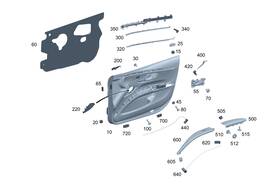
( Manufacturer Part Number: 297-900-15-14 ), ( Part Type: Control Unit ), ( Genuine Oem: Yes ), ( Manufacturer Warranty: 1 Year ), ( Fitment Type: Direct Replacement ), ( Parts Included: Only Part Reference 350 On The Diagram Is Included )
Review MERCEDES benz Genuine Control Unit
The **Mercedes-Benz 297-900-15-14 Control Unit** is a high-performance, precision-engineered electronic module designed exclusively for select Mercedes-Benz vehicles, serving as the central hub for advanced engine management, powertrain control, and diagnostic communication. This sophisticated component integrates seamlessly into the vehicle s onboard network, facilitating real-time data exchange between the engine control unit (ECU), transmission system, and other critical subsystems. Built to Mercedes-Benz s stringent quality standards, the 297-900-15-14 is constructed with robust, high-grade materials, including reinforced circuit boards, shielded connectors, and corrosion-resistant housing, ensuring durability and reliability even under demanding operating conditions. Its advanced microcontroller architecture enables adaptive learning algorithms, allowing the unit to optimize engine performance, fuel efficiency, and emissions compliance while dynamically adjusting to varying driving conditions. The control unit also incorporates robust error-checking protocols and self-diagnostic capabilities, providing detailed fault codes and system status updates via the vehicle s OBD-II interface or Mercedes-Benz diagnostic tools like the STAR or MB Star diagnostic systems. Whether installed in luxury sedans, SUVs, or high-performance models, this control unit plays a pivotal role in maintaining the vehicle s premium driving dynamics, ensuring smooth operation, and extending the lifespan of the powertrain components. For technicians and enthusiasts alike, the 297-900-15-14 represents a critical replacement part for vehicles experiencing electrical malfunctions, sensor failures, or system communication errors, offering a direct upgrade or restoration of factory-level functionality.
The **Mercedes-Benz 297-900-15-14** control unit is a **DME (Digital Motor Electronics) module**, specifically the **Bosch MED 9.7** or **MED 9.9** engine control unit used in older Mercedes-Benz vehicles, particularly in models with **OM611, OM612, OM616, or OM646** diesel engines (e.g., W203, W204, W210, W211, W205). Below is a detailed breakdown of its pros and cons, followed by a conclusion and recommendation.
---
### **Pros of Buying a Used/Aftermarket 297-900-15-14 Control Unit**
1. **Compatibility with Classic Mercedes-Benz Engines**
- This ECU is designed for **OM611, OM612, OM616, and OM646** diesel engines, which are common in **E-Class (W203, W204), C-Class (W205), and ML-Class (W163, W164)** models from the late 1990s to early 2000s.
- If your vehicle s original ECU is faulty or unavailable, this unit can restore functionality.
2. **Aftermarket Availability and Cost-Effectiveness**
- Unlike OEM units, aftermarket versions are often **significantly cheaper** (typically **$100 $300** vs. **$500 $1,000 ** for OEM).
- Easier to source from **eBay, Alibaba, or specialized ECU suppliers** rather than relying on Mercedes-Benz dealerships.
3. **Potential for Tuning and Modifications**
- Some aftermarket versions allow for **remapping or flashing** to improve performance (e.g., increasing torque, reducing emissions).
- Can be paired with **Bosch MED 9.x software** for diagnostics and adjustments.
4. **Long-Term Reliability (If Original)**
- If the unit is **original and in good condition**, it can last **10 15 years or more** with proper care.
- Many owners report **no issues** with these ECUs if they were well-maintained.
5. **DIY-Friendly Installation**
- Replacing an ECU is a **moderate-level DIY job** that requires **basic wiring knowledge** and **soldering skills** (if connectors are damaged).
- Many online guides and forums (e.g., **MercedesBenzForum, DieselNet**) provide step-by-step instructions.
6. **Prevents Further Engine Damage**
- A failing ECU can lead to **fuel pump failure, injector damage, or turbo issues** if left unaddressed.
- Replacing it early can **save thousands in long-term repairs**.
---
### **Cons of Buying a Used/Aftermarket 297-900-15-14 Control Unit**
1. **Risk of Counterfeit or Low-Quality Units**
- Many aftermarket ECUs are **not genuine Bosch units** but **clones or rebranded parts** with **poor reliability**.
- Some may **not communicate properly** with the vehicle s sensors, leading to **error codes (e.g., P0300 P0308 misfire, P0171/174 fuel trim issues)**.
- **No warranty** from most sellers, meaning you bear the risk if it fails.
2. **Potential for Software Mismatches**
- The **MED 9.7/9.9 software version** must match your engine s **fuel pump, injectors, and turbo specifications**.
- Using the wrong software can cause **poor performance, rough idling, or even engine damage**.
- Some aftermarket units come with **generic firmware**, requiring **manual flashing** (which may void warranties).
3. **Compatibility Issues with Modern Modifications**
- If your vehicle has **aftermarket parts (e.g., turbo upgrades, fuel injectors, or exhaust modifications)**, the stock ECU may **not support them properly**.
- Requires **custom tuning**, which adds complexity and cost.
4. **No OEM Support or Diagnostics**
- Unlike original Mercedes-Benz ECUs, aftermarket units **do not have official Mercedes-Benz diagnostics tools**.
- Debugging issues may require **third-party software (e.g., Bosch KTS, VCDS, or OBD-II scanners with MED 9.x support)**.
- Some units **lack proper error logging**, making troubleshooting difficult.
5. **Potential for Electrical Issues**
- If the **harness or connectors** are damaged, the new ECU may **not function correctly**.
- Some aftermarket units have **poor-quality soldering or wiring**, leading to **intermittent connections**.
- Requires **careful inspection** before installation.
6. **Limited Longevity Compared to OEM**
- While original ECUs can last **decades**, aftermarket units may **fail prematurely** due to **cheap components or poor manufacturing**.
- Some users report **firmware corruption** or **hardware failures** within **1 3 years**.
7. **Legal and Warranty Concerns**
- Installing an **aftermarket ECU may void your vehicle s warranty** (if still under factory coverage).
- In some regions, **modifying ECUs without proper homologation** could lead to **insurance or registration issues**.
8. **Learning Curve for Tuning**
- If you plan to **remap the ECU**, you ll need to learn **fueling strategies, ignition timing, and emissions compliance**.
- Incorrect tuning can **destroy injectors, turbochargers, or the catalytic converter**.
---
### **Conclusion**
The **Mercedes-Benz 297-900-15-14 ECU** is a **practical and cost-effective solution** for restoring function to a **failing diesel engine control system**, especially in **classic Mercedes-Benz models**. However, the **quality and reliability depend heavily on whether you purchase an original OEM unit or a reputable aftermarket version**.
- **If you need a quick, budget-friendly fix and your engine is stock**, an **aftermarket unit from a trusted seller** (with proper software) can work well.
- **If you want long-term reliability and full compatibility**, an **original OEM ECU (if available)** is the best choice, despite the higher cost.
- **If you plan modifications**, ensure you have **access to proper tuning tools and expertise** to avoid damaging the engine.
---
### **Recommendation**
1. **Verify Compatibility First**
- Confirm that your **engine model (OM611/612/616/646) and year** match the ECU s specifications.
- Check for **fuel pump, injector, and turbo compatibility** before purchasing.
2. **Buy from a Reputable Source**
- **Avoid unknown sellers** opt for **eBay (with positive feedback), specialized ECU suppliers, or trusted Mercedes-Benz forums**.
- Look for **units with proper Bosch labeling** (not just "Mercedes-Benz" clones).
- If possible, **test the unit before buying** (some sellers offer return policies).
3. **Consider an Original OEM Unit If Available**
- If you can find an **original Mercedes-Benz ECU (e.g., from a salvage yard or dealer trade-in)**, it will be **more reliable** but **more expensive**.
- Check **Mercedes-Benz parts catalogs** or **specialty ECU resellers** like **ECU2Go, EuroParts, or Jegs**.
4. **Prepare for Potential Software Issues**
- If using an aftermarket unit, **back up your original ECU s software** (if possible) before flashing.
- Use **reputable flashing tools** (e.g., **Bosch KTS, VCDS, or WinKFP**) to avoid bricking the unit.
- Consider **professional flashing** if you re not experienced.
5. **Inspect Wiring and Connectors**
- Before installation, **check the harness for damage** corroded or broken pins can cause **intermittent issues**.
- If connectors are damaged, **replace them** or **solder new ones** properly.
6. **Test Thoroughly After Installation**
- **Clear all error codes** and **monitor for misfires, fuel trim issues, or rough idling**.
- Use an **OBD-II scanner** to ensure the ECU is communicating with all sensors.
- If issues persist, **revert to the original ECU** or seek **professional diagnostics**.
7. **Avoid DIY Tuning Unless Experienced**
- **Remapping an ECU without proper knowledge can destroy your engine.**
- If you want performance gains, **consult a Mercedes-Benz specialist** before making changes.
---
### **Final Verdict**
- **Best for:** Owners of **classic Mercedes-Benz diesel models** who need a **budget-friendly ECU replacement** and are **willing to troubleshoot**.
- **Avoid if:** You want **guaranteed reliability**, have **modified engines**, or **lack technical knowledge** for diagnostics.
- **Best alternative:** If possible, **restore the original ECU** or **upgrade to a newer
Details:
Shipping Carrier substitutions may be made at our determination in an attempt to reduce shipping cost the customer. Electrical parts are not returnable. Parts must be resealable and in the original packaging.
part #: 2979001514 prices
- $375.53-$570.81
specifications interiorlightsot:
- for makes: Mercedes
- mpn: 297-900-15-14
- part type: Control Unit
- genuine oem: Yes
- manufacturer warranty: 1 Year
- fitment type: Direct Replacement
- parts included: Only Part Reference 350 On The Diagram Is Included
returns interiorlightsot:
- paid by: Seller
- time: 30 Days
- policy: Returns Accepted
shipping interiorlightsot:
- carrier: FedEx
- cost: $21.29
- type: Fixed
- class: Standard
- service: FedEx Ground / FedEx Home Delivery
- transit: 5-9 Days
seller interiorlightsot:
- city: Farmington, Utah
- # reviews: 1312
- rating: 99.2%
general interiorlightsot:
- Car Truck Parts Accessories > Lighting Lamps > Interior Light Assemblies
- condition: New
payments interiorlightsot:
- other
- credit card: Mastercard
- wallet: Google-pay
offer interiorlightsot:
- availability: In Stock
- quantity: 2
- started: April 19, 2026
- sold: 0
- options: Ship-to-home
Mercedes 297-900-15-14 Is Similar To:
- 000-821-2852 Mercedes-benz Genuine Mercedes Door (60% similar) Price often negotiable please look at pictures carefully. Never hurts. Or . I do combine shipping charges. Mercedes removed from 1976 240D W115 ref: BSRF0003 these are used parts with imperfections, wear age and light scratches as seen in the pictures...(April 6th, 2017)
- 000000004146 Mercedes-benz Mercedes Oem 07-13 (39.3% similar) 1 are in their original packaging 2 have manufacturer information 3 not used, installed, or disassembled 4 damaged due to incorrect installation 5 do having missing parts, hardware instructions...(February 15th, 2018)
- 0008205810 Mercedes Benz Horizontal Rear Interior Dome Cabin Light Lamp Switch (35.7% similar) ...(April 15th, 2018)
- 00090048089051 Mercedes-benz Mercedes Oem 14-17 (38.5% similar) ...(December 19th, 2017)
- 00090072081b88 Mercedes Benz Interior Dome Light Lamp Part Oem (35.5% similar) Mercedes benz interior dome light lamp, oem. Please see photo 3 for a defective sun glass holder it does not close, remains open all the time...(July 23rd, 2018)
- 00090090069051 Mercedes-benz Mercedes Oem 16-17 (40.4% similar) They are shipped via fed ex unless oversized or require other services and - direct signatures at time of delivery...(July 1st, 2017)
- 00090090079051 Mercedes-benz Map Light (46% similar) They are shipped via fed ex unless oversized or require other services and - direct signatures at time of delivery...(February 14th, 2018)
- 00090628039051 Mercedes-benz Mercedes Oem 14-17 (38.5% similar) This part fits vehicles made in the following years 2014 , 2015 , 2016 , 2017...(January 11th, 2018)
- 00090695047h52 Mercedes-benz Mercedes Oem 16-17 (38.5% similar) This parts position is left, right...(August 19th, 2017)
- 00090695049051 Mercedes-benz Mercedes Oem 16-17 (38.5% similar) V8 gas turbocharged, this parts position is left, right...(December 27th, 2017)
- 0018207901 Mercedes-benz Mercedes Oem 14-16 (40% similar) This parts position is left, right. This part fits vehicles made in the following years 2014 , 2015 , 2016 . 1 are in their original packaging 2 have manufacturer information 3 not used, installed, or disassembled 4 damaged due to incorrect installation 5 do having missing parts, hardware ...(October 13th, 2017)
